

Database Partitioning in SQL Server
This article explains how to implement database partitioning in SQL Server, its benefits, and best practices.
Database Partitioning in SQL Server Read Post »
This article explains how to implement database partitioning in SQL Server, its benefits, and best practices.
Database Partitioning in SQL Server Read Post »

This article mentions the categorized list of important Python libraries with examples of how to use them.
What are the important python libraries? Read Post »

An estimated query plan is a prediction based on available statistics whereas an actual query plan includes runtime execution details.
Understanding Estimated and Actual Query Plans in SQL Server Read Post »

What are DMVs in SQL Server? Dynamic Management Views (DMVs) are system views in SQL Server. They provide insights into
What are DMVs in SQL Server and how to use them? Read Post »

Temporal Tables in SQL Server Temporal Tables (also known as system-versioned tables) are a feature in SQL Server. They allow
What are temporal tables in SQL and how to use them for historical data tracking? Read Post »

This article explains Correlated subqueries which are a powerful SQL feature for handling row-specific comparisons and complex conditions.
Correlated Subqueries in SQL Server Read Post »

To our readers, friends, and loved ones, we wish you a Christmas filled with laughter and love. Enjoy the company
🎄🌟🎁Merry Christmas🎁🌟🎄 Read Post »

This article explains Materialized views & its benefits in SQL Server which provide a powerful mechanism for improving query performance.
Materialized View in SQL Server and its benefits Read Post »

In SQL Server, hints are directives provided to the query optimizer to influence how a query is executed. They can
Understanding working of SQL Server Hints with examples Read Post »

In the context of database management, partitioning refers to the technique of dividing large tables or indexes into smaller, more
Vertical and Horizontal partitioning in SQL Server Read Post »

The Actual Execution Plan and the Estimated Execution Plan in SQL Server provide insights into how a query will or
Difference between Actual & Estimated Execution Plan Read Post »

Parameter sniffing in SQL Server happens when a query execution plan is generated using specific parameter values. Subsequent executions of
Parameter Sniffing in SQL Server Read Post »

This article explains SQL Server’s architecture which is designed to provide high performance, scalability, and security.
What are SQL Server Architecture concepts? Read Post »

This article explains Role-Based Access Control in SQL Server that simplifying access management and enhancing database security.
What is Role-Based Access Control in SQL Server? Read Post »

Ensuring GDPR (General Data Protection Regulation) and HIPAA (Health Insurance Portability and Accountability Act) compliance involves a comprehensive approach to
Understanding of GDPR & HIPPA Read Post »

Multiple execution plans being cached for the same query can lead to performance degradation. This article explains how to solve it.
How to resolve multiple execution plans cache issue? Read Post »

🔷What are Window Functions? Window functions are a class of SQL functions. They perform calculations across a set of table
Comprehensive Guide to SQL Window Functions Read Post »
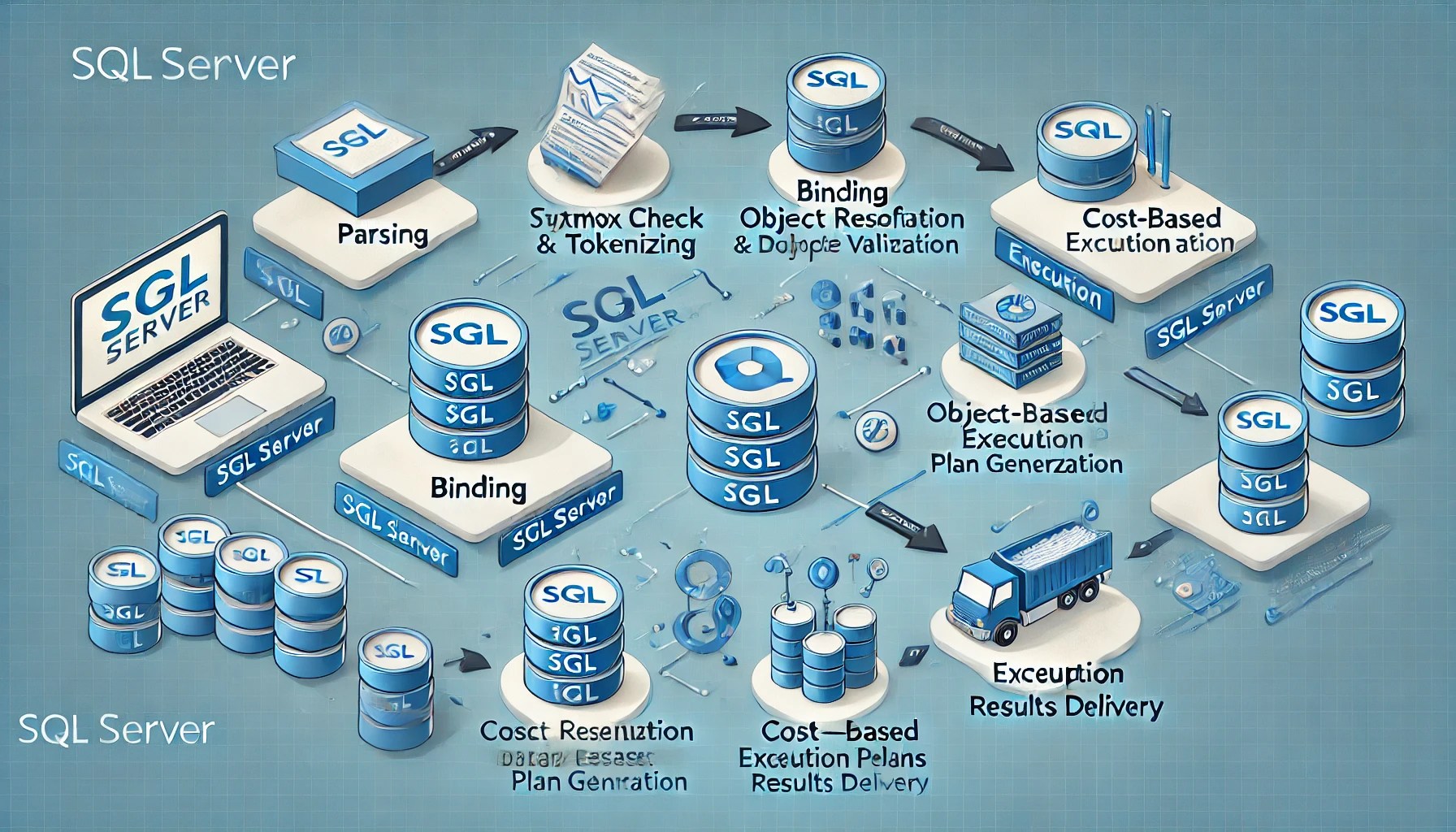
When SQL Server compiles and executes a SQL batch, it does not compile each line of code individually. Instead, it
How SQL Server Handles SQL Batch Execution Read Post »

Data modeling is essential for effective database design, serving as a blueprint for data structure and management. It improves data integrity, performance, and scalability. Key components include conceptual, logical, and physical models. Best practices involve understanding business needs, normalizing data, defining keys, and ensuring security while documenting the model for future reference.
Top Data Modeling Best Practices for Efficient Databases Read Post »